
Raw vs Parboiled 100% Broken Rice: Which Is Better for Import?
100% broken rice plays an important role in global food supply chains. It is widely used in food processing, animal feed, brewing, and industrial applications. For international buyers, the key decision is often not whether to import broken rice, but which type to import.
The choice usually comes down to raw or parboiled 100% broken rice.
Both types have distinct characteristics, and selecting the right one depends on end use, storage conditions, and market demand. Understanding these differences helps importers make cost-effective and quality-driven purchasing decisions.
What Is 100% Broken Rice?
100% broken rice consists of rice fragments that break during milling. While the grains are not whole, the nutritional value remains largely intact. This makes broken rice a valuable commodity in many international markets.
Buyers sourcing from Indian 100% Broken Rice Traders often prefer it due to consistent quality, competitive pricing, and high-volume availability.
Understanding Raw 100% Broken Rice
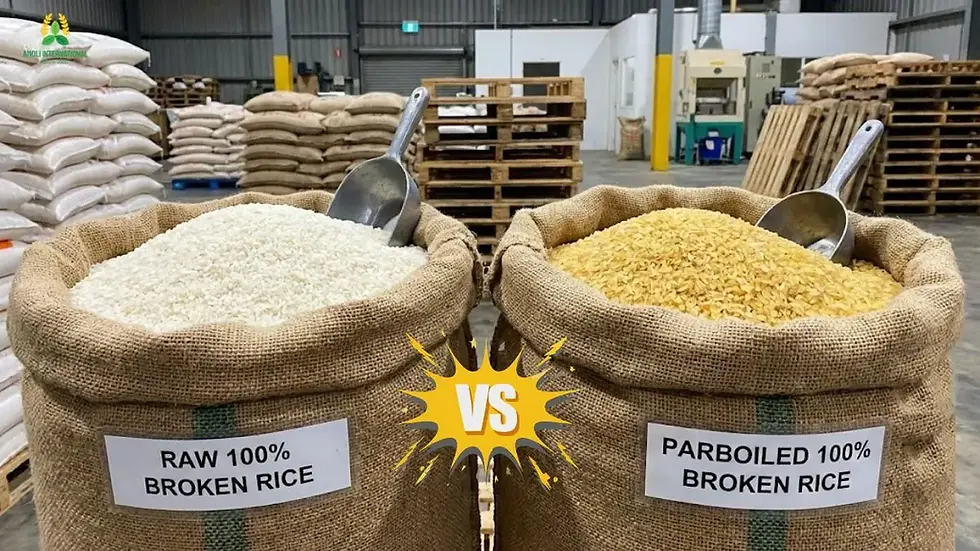
Raw broken rice is milled directly from raw paddy without undergoing steaming or boiling. It retains its natural white appearance and neutral flavor.
Key Characteristics of Raw Broken Rice
Bright white color
Lighter texture
Faster cooking time
Neutral taste profile
Raw broken rice is commonly used in:
Rice flour production
Snacks and food processing
Breweries and fermentation units
For buyers focused on food manufacturing, raw broken rice offers flexibility and ease of processing.
Understanding Parboiled 100% Broken Rice
Parboiled broken rice undergoes soaking, steaming, and drying before milling. This process hardens the grain structure and pushes nutrients from the husk into the grain.
Key Characteristics of Parboiled Broken Rice
Slightly yellow or golden color
Firmer texture
Higher resistance to breakage during handling
Better nutrient retention
Parboiled broken rice is widely preferred in:
Animal feed industries
Large-scale institutional consumption
Markets with high humidity and long storage cycles
Storage and Shelf Life Comparison
Storage stability is a major factor for importers dealing with long shipping routes.
Raw broken rice:
Requires controlled storage conditions
More sensitive to moisture and pests
Shorter shelf life if not stored properly
Parboiled broken rice:
More resistant to moisture
Better suited for tropical climates
Longer shelf life during extended storage
This makes parboiled broken rice a safer option for markets where warehousing conditions may vary.
Price and Cost Considerations
From a pricing perspective, raw broken rice is usually slightly cheaper due to minimal processing. However, parboiled broken rice often delivers better long-term value because of reduced spoilage and storage losses.
Buyers comparing suppliers among the Best International Exporters in India often balance initial price against handling efficiency and shelf stability.
Market Demand and Import Preferences
Different regions show different preferences:
Africa and Southeast Asia often prefer parboiled broken rice for durability
Food processing industries lean toward raw broken rice
Animal feed markets prioritize parboiled varieties
Understanding local demand helps importers select the most profitable option.
Role of Indian Exporters in Global Supply
India is one of the largest suppliers of broken rice globally. Reliable sourcing from Non Basmati Rice Exporters in India ensures access to both raw and parboiled variants in consistent volumes.
Exporters offer:
Custom specifications
Bulk packaging options
Compliance with international quality standards
This flexibility makes India a preferred sourcing destination for broken rice imports.
Final Verdict: Which Is Better for Import?
There is no universal answer. The better option depends on your intended use and market conditions.
Choose raw 100% broken rice if:
You supply food processing or brewing industries
You require faster cooking and lighter texture
Storage conditions are well controlled
Choose parboiled 100% broken rice if:
You prioritize long shelf life
You operate in humid climates
You serve animal feed or institutional markets
For global buyers, aligning product choice with end-use requirements leads to better cost efficiency and long-term success.
Comments